
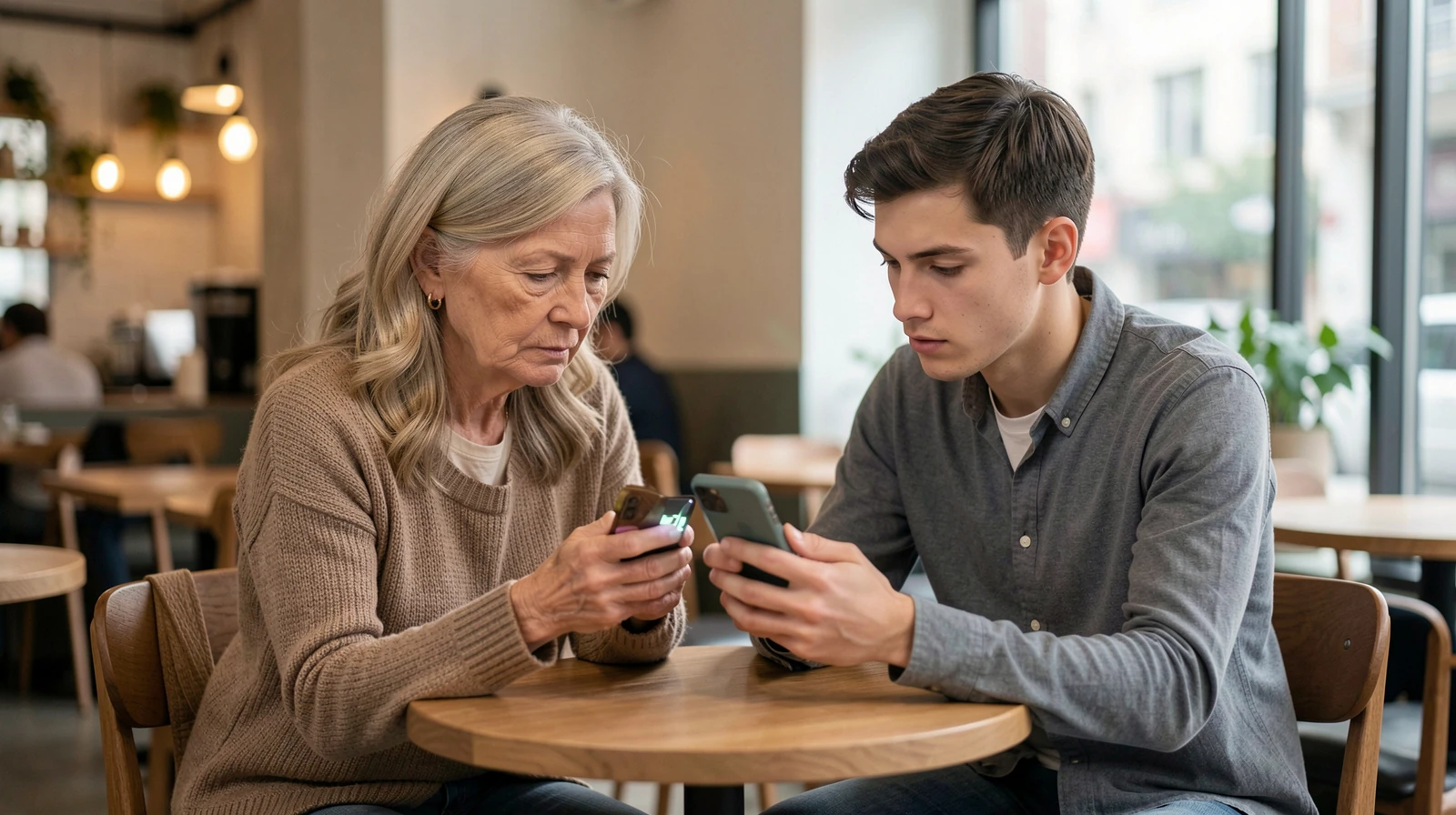
A sugar momma scam usually starts with a message that feels flattering, exciting or almost too easy. Someone online says she is a generous older woman, wants a younger companion, and is ready to send money before you have built any real trust.
The problem is that many of these messages are not from real sugar mommas at all. They are fake profiles designed to get you to deposit a check, send money back, pay a “verification fee,” share financial details, buy gift cards or move the conversation to a payment app.
If someone you just met online offers you a large allowance, sends a check, asks for Cash App, wants a fee before payment, or tells you to return part of the money, treat it as a major red flag. Banks may make deposited funds available before a check is actually confirmed as good, and fake checks can take weeks to be discovered. (Consumer Advice)
What Is a Sugar Momma Scam?
A sugar momma scam is a type of online dating or romance scam where a fake profile pretends to be a mature, generous woman interested in a younger partner.
The scammer may use phrases like:
- “I just need someone to talk to.”
- “I’ll pay you every week.”
- “Send me your Cash App.”
- “Deposit this check.”
- “Send some of it back.”
- “Pay this small fee first.”
- “Buy a gift card so I know you’re serious.”
- “Send a private photo to prove trust.”
The goal is not a real dating connection. The goal is usually money, personal information, account access, private photos or emotional control.
This does not mean every age-gap dating interest is fake. Mature women, younger men and sugar dating dynamics do exist online. But a real connection should not begin with a stranger pushing you into financial transactions before trust, identity and expectations are clear.
For a broader explanation of the dating side, read Is Sugar Momma Dating Real?.
How Sugar Momma Scams Usually Start
Many sugar momma scams begin on social platforms, dating apps or private messaging channels. A stranger may contact you on Instagram, Snapchat, Facebook, TikTok, WhatsApp or another app and quickly move the conversation toward money.
The first message may feel harmless. The person might say she is lonely, successful, older, generous or looking for someone younger to talk to. Then the offer becomes more specific: a weekly allowance, bill payments, shopping money or a large first payment.
That is where the risk begins. A real dating connection normally develops through conversation, boundaries and mutual interest. A scam often skips that stage and creates pressure around money almost immediately.
The Fake Check Trap: Why “Cleared” Does Not Mean Safe
One of the most common sugar momma scams is the fake check scam.
The scammer sends you a check, often for a large amount. They may say it is your allowance, a gift, a test payment or money for errands. After you deposit it, your bank may show the funds as available. That can make the payment look real.
But available funds do not mean the check is safe. The FTC warns that fake checks can take weeks to be discovered, and if you send money before the bank identifies the check as fake, you may be responsible for paying the bank back. (Consumer Advice)
A typical fake check sugar momma scam works like this:
- A stranger offers to pay you.
- She sends a check by email, message or photo.
- You deposit the check.
- Your account appears to show money available.
- She says she overpaid or needs you to send part of it elsewhere.
- You send money by Cash App, Venmo, gift card, crypto or bank transfer.
- The check is later rejected as fake.
- The money you sent is gone, and your bank may hold you responsible.
The safest rule is simple: do not deposit checks from strangers you met online, especially if they want you to send money back.
“She Sent Me a Check and It Cleared. Am I Safe?”
No, not necessarily.
This is the exact trap scammers rely on. Many people think “cleared” means the bank has fully verified the check. In reality, banks often make money available quickly because of banking rules, but that does not prove the check is legitimate.
A check can look real, include a real bank name, and still be fake or linked to a stolen account. If the check fails later, the money can be removed from your account.
If a sugar momma sends you a check and then asks you to send some money back, pay another person, buy gift cards, send crypto or use Cash App, do not do it. That request is one of the clearest signs of a scam.
Cash App Sugar Momma Scams
Cash App is often mentioned in sugar momma scams because it makes money transfers feel quick and casual. The scammer may ask for your Cash App tag, claim she is sending a large payment, or say you need to pay a small fee to unlock the money.
Cash App’s own safety guidance says users should only send money to people they know, avoid sharing one-time passcodes, turn on security lock and watch for suspicious activity. (Cash App)
Be careful if someone says:
- “Send $50 to receive $5,000.”
- “This is a business account verification fee.”
- “Cash App needs you to pay before the money releases.”
- “I accidentally sent too much. Send some back.”
- “Send it to my assistant.”
- “Use this account to pay your bills.”
- “Give me your login code so I can complete the payment.”
A real person who wants to date you should not need your login code, bank details or a fee before sending money. A real dating conversation should also not begin with payment instructions.
Instagram and Snapchat Sugar Momma Red Flags
Instagram and Snapchat scams often use emotional language, attractive stolen photos and quick financial promises. A fake profile may look polished, but the conversation usually feels rushed.
Watch for these signs:
- The account has very few posts or followers.
- The photos look too polished, stolen or inconsistent.
- The person refuses to video chat or answer normal identity questions.
- She talks about payment before knowing much about you.
- She pushes you to Cash App, crypto, gift cards or email checks.
- She avoids normal dating conversation and keeps returning to money.
- She creates urgency, guilt or pressure.
- Her story changes when you ask basic questions.
Social media and payment apps can make it easy for scammers to contact strangers, build trust and move quickly toward payment requests. Scam guides commonly warn users to be cautious with unsolicited messages, avoid sharing financial information and report suspicious profiles. (Mozo)
The “Send Money Back” Trick
A common scam line is:
“I sent too much. Can you send part of it back?”
Do not send it.
This trick works because the first payment may be fake, stolen or reversible, while your payment may be real and hard to recover. The scammer may ask you to return money through Cash App, Venmo, gift cards, crypto, wire transfer or another method.
The same pattern can appear in different forms:
| What the scammer says | What may really be happening |
|---|---|
| “I overpaid you by mistake.” | Fake check or stolen account scam |
| “Send money to my assistant.” | You are being used to move money |
| “Buy gift cards for me.” | Gift cards are hard to reverse |
| “Pay a small fee first.” | Advance-fee scam |
| “Use my bank account to pay your bills.” | Possible stolen account fraud |
| “Refund me through another app.” | Your money may be gone while the first payment reverses |
A real connection should not require you to move money for someone you just met online.
Gift Cards, Crypto and “Verification Fees”
Gift cards and crypto are especially risky because they are difficult to reverse. If someone tells you to pay a fee with gift cards, send Bitcoin, buy prepaid cards or share card codes, it is almost certainly a scam.
The FTC’s guidance on gift card scams is direct: gift cards are for gifts, not payments, and anyone who tells you to pay with a gift card is a scammer. (Consumer Advice)
Sugar momma scammers may call the fee:
- a loyalty fee
- a trust fee
- a processing fee
- a release fee
- a verification fee
- a business account fee
- an activation fee
- a transaction fee
The name does not matter. If you must pay money to receive money from someone you just met online, stop.
Private Photos, Videos and Blackmail Risks
Some sugar momma scams do not start with checks or payment apps. They start with attention, flirting and requests for private photos or videos.
The scammer may say:
- “I need to know you trust me.”
- “Send something private first.”
- “I’ll pay after you send it.”
- “I won’t share it.”
- “This is part of our arrangement.”
This can turn into blackmail. After receiving private content, the scammer may threaten to send it to your friends, family, school, workplace or social media contacts unless you pay.
Do not send private photos, explicit videos, ID documents or sensitive personal details to someone you have not verified and do not trust. If you already sent something and the person is threatening you, do not keep paying. Save evidence, block and report the account, and consider contacting local authorities or a trusted legal support service.
Sugar Momma Scam Red Flag Checklist
It is probably a sugar momma scam if:
- A stranger contacts you first on Instagram, Snapchat or another social app.
- She offers large weekly payments before knowing you.
- She says you only need to chat and nothing else.
- She sends a check by email, screenshot or message.
- She asks you to deposit a check and send money back.
- She asks for Cash App, gift cards, crypto or wire transfers.
- She says you must pay a fee before receiving money.
- She claims a business account needs activation.
- She wants your bank login, Cash App login or one-time code.
- She asks you to move money to another person.
- She pressures you to act quickly.
- She refuses a normal verification conversation.
- Her profile photos look stolen or too perfect.
- Her story changes when you ask simple questions.
- She asks for private photos, videos or identity documents.
One red flag is enough to slow down. Several red flags together are a strong reason to stop replying.
What To Do If You Already Responded
If you already replied to a possible sugar momma scam, do not panic. What matters is what you do next.
If you only replied to messages
Stop replying, block the profile and report it on the platform. Do not argue with the scammer. Do not explain your decision. The more you respond, the more chances they have to pressure you.
If you shared your Cash App tag
Sharing a tag is not the same as giving someone full account access, but you should still be cautious. Do not send money, do not pay fees, do not share login codes and do not follow instructions from someone claiming to be support.
Turn on extra security settings where possible and monitor your account for suspicious activity.
If you deposited a check
Do not spend the money. Do not transfer it. Do not send any portion back.
Contact your bank and explain that you may have deposited a fake check from someone you met online. It is better to report the concern early than to wait until the scammer pressures you again.
If you already sent money
Contact the payment platform, bank, gift card company or crypto service immediately. Save screenshots, usernames, emails, phone numbers, receipts and transaction IDs.
The FTC advises people who paid a scammer to contact the company used for payment as soon as possible and ask whether the transaction can be stopped or reversed. (Consumer Advice)
If you sent private photos or videos
Do not send more. Do not keep paying if the person threatens you. Save evidence, report the account and consider getting help from someone you trust.
Blackmailers often keep demanding more money after the first payment. Paying does not guarantee they will delete anything.
How to Protect Yourself Before It Happens
The safest approach is to separate dating from money until real trust exists.
Before you believe any sugar momma offer, ask yourself:
- Do I know who this person really is?
- Have we had normal conversations beyond money?
- Are they rushing me?
- Are they asking for a payment, fee or refund?
- Are they asking for my private information?
- Would this still make sense if no money was mentioned?
- Am I being pressured to act before I can think?
A respectful age-gap dating connection should feel adult, clear and mutual. It should not feel like a financial puzzle, a payment test or an emergency.
For a safer approach to meeting mature women and age-gap singles, read How to Find a Sugar Momma Safely.
What Safer Sugar Momma Dating Should Look Like
Safer sugar momma dating usually starts with a profile, not a payment.
That means:
- creating a realistic dating profile
- using private messages first
- keeping expectations clear
- asking normal questions
- protecting personal details
- avoiding fast financial promises
- not accepting checks from strangers
- not sending money to unlock money
- moving slowly before meeting offline
FindSugarMomma is designed as a dating platform where adults can create a profile, browse members, search and start private conversations. It should still be used with common sense. No dating platform can remove every risk, and no user should ignore obvious scam behavior just because a profile looks attractive.
You can also visit the FindSugarMomma homepage, read more on the blog or review the site’s Privacy Policy and Terms & Conditions.
FAQ About Sugar Momma Scams
Is a sugar momma who messages me on Instagram always a scam?
Not always, but it is risky when a stranger contacts you first, offers money quickly and pushes the conversation toward Cash App, checks, gift cards or private information.
A real connection should include normal conversation, boundaries and trust. A scam often moves straight to payment instructions.
Is it safe to give a sugar momma my Cash App tag?
Giving a Cash App tag is not the same as giving someone your password, but it can still lead to scam attempts. Be especially careful if the person asks you to pay a fee, send money back, share a code or accept strange payment instructions.
Never share one-time passcodes, account login details or sensitive financial information.
What if the check already cleared?
Do not assume you are safe. Funds may appear available before the check is fully verified. Fake checks can be discovered later, and if you already sent money out, you may be responsible for the loss. (Consumer Advice)
Should I send money back if she overpaid me?
No. Do not send money back to someone you just met online. Contact your bank or payment platform and explain the situation.
“Overpayment” is one of the most common fake check and refund scam patterns.
Why would a scammer send me money first?
The first payment may not be real. It may be a fake check, a stolen account transaction, a fake payment screenshot or a payment that can later be reversed.
The scammer wants you to believe money has arrived so you feel safe sending real money out.
Are real sugar mommas online?
Mature women and age-gap dating do exist online, but real connections usually do not start with a stranger offering large payments before trust. Dating should begin with conversation, mutual interest and clear expectations.
What should I do if I paid with a gift card?
Contact the gift card company right away, tell them the card was used in a scam and ask whether anything can be done. Keep the card and receipt. You can also report the scam to the FTC. (Consumer Advice)
Can a sugar momma scam turn into blackmail?
Yes. If someone asks for private photos, videos, ID documents or personal details, they may later use them to pressure you. Do not send sensitive content to someone you cannot verify.
Final Advice: Keep Dating and Money Separate Until Trust Exists
A sugar momma scam often feels exciting at first because it promises attention, money and easy connection. That is exactly why it works.
Slow down. Ask questions. Do not deposit checks from strangers. Do not send money to receive money. Do not share private information too early. Do not let a fake profile rush you into a financial decision.
A real dating connection should feel respectful, honest and human. If the conversation becomes all about checks, Cash App, fees, refunds or pressure, it is time to walk away.
[1] https://consumer.ftc.gov/articles/how-spot-avoid-and-report-fake-check-scams?utm_source=chatgpt.com How To Spot, Avoid, and Report Fake Check Scams
[2] https://cash.app/security?utm_source=chatgpt.com Cash App Security: Protecting Your Money & Account
[3] https://getmozo.com/blog/cash-app-and-snapchat-sugar-momma-scams-are-on-the-rise Cash App and Snapchat Sugar Momma Scams Are On The Rise!
[4] https://consumer.ftc.gov/media/video-0171-report-gift-cards-used-scam?utm_source=chatgpt.com Report Gift Cards Used in a Scam
[5] https://consumer.ftc.gov/articles/what-do-if-you-were-scammed?utm_source=chatgpt.com What To Do if You Were Scammed
[6] https://consumer.ftc.gov/articles/avoiding-and-reporting-gift-card-scams?utm_source=chatgpt.com Avoiding and Reporting Gift Card Scams